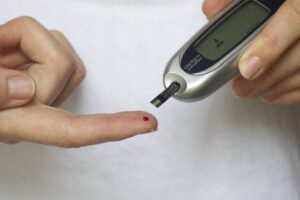
In the March/April 1999 issue of Alaska Wellness, I published three articles on the artificial sweetener aspartame. Specifically, the articles looked at the numerous health problems that may develop from our ingestion of aspartame (the key ingredient in NutraSweet and Equal) and how it is added to so many of our everyday products – nearly 6,000 – in everything from low-calorie drinks and sugar-free snacks to chewing gum, yogurt, cereal, and even children’s Vitamins.
The toxic effects of aspartame are varied. It has been connected to mimicking the signs of or worsening the following: chronic fatigue and immune deficiency syndrome, Arthritis, Parkinson’s disease, epilepsy, Attention Deficit Disorder, panic disorder and more. The toxic effects of aspartame use may include dizziness, ringing in the ears, Migraines, confusion, Irritability, Depression, Insomnia, rapid heart beat, chest Pains, memory loss, weight gain, hair thinning/loss, abdominal Pains, food cravings, Hypertension, increased infections and much more. (See links below for further information.)
The following article includes a summary of the history of aspartame as we printed it in our 1999 issue, along with some new research and information. As with the history of many other known toxins (such as MSG and fluoride), it is distressing to see our government’s involvement in allowing such substances to be used by big industries and sold (and, in some cases, even touted as ‘healthy’) to the general public – every one of us! It has been said that aspartame may be one of the most toxic substances in our food supply today and that aspartame related problems may be seriously compromising our health, often without our knowledge.
A Controversial History
Aspartame was discovered accidentally in 1965 by a scientist at the G. D. Searle Company. Because it is nearly 200 times as sweet as sugar and has no calories, it looked to have enormous potential, especially in the diet industry.
Searle began safety testing aspartame in 1967, in hopes of getting FDA approval, but encountered many problems – the animals that were fed aspartame (most usually small monkeys) kept dying. Searle spent tens of thousands of dollars in testing, and applied for FDA approval in 1973. Although several scientists found Searle’s testing “shoddy” and recommended that further testing was necessary, the FDA granted approval for use in dry foods.
Objections from consumer advocacy groups finally sparked the FDA to re-investigate aspartame in 1976, leading to a Grand Jury proceedings against Searle for “concealing material facts and making false statements” in their safety tests.
Now, get this: In 1977, Searle’s law firm offered a job to the U. S. Attorney in charge of the investigation, Samuel Skinner. Skinner accepted the job and left the government, thus stalling the investigation so long that the statute of limitations ended and the investigation was dropped.
In 1980, a Board of Inquiry asserted that aspartame should not be approved due to the possibility of its causing brain tumors in animals. However, in yet another sneaky government-big business move, the CEO of Searle became part of Ronald Reagan’s transition team. This former head of Searle handpicked Dr. Arthur Hayes, Jr., as the new FDA Commissioner. Over the strong objection of three FDA scientists, Hayes approved the use of aspartame in dry products.
Can the story get any worse? Yes, it can. In 1983, the National Soft Drink Association urged the FDA to delay the approval of aspartame in beverages since it was known to be very unstable in liquid form. (When stored above 85 degrees F., aspartame breaks down into diketopiperazine and formaldehyde, two known toxins.) Other objections were also filed with the FDA regarding aspartame approval. When a controversy regarding taking unauthorized rides on a General Foods jet (General Foods being a major customer of NutraSweet) forced FDA Commissioner Hayes to resign in 1983, he was promptly hired as a consultant to Searle’s public relations firm.
Thus it happened that the first carbonated beverages containing aspartame were sold for public consumption in 1983.
Current Findings
Aspartame is still under investigation and still very controversial. Most recently, scientists at the independent European Ramazzini Foundation for Cancer Research presented new results from their three-year study of the effects of aspartame on nearly 2,000 rats. Their research concluded that aspartame is a “multipotential carcinogen,” causing dose-related cancer of the kidney and tumors in the peripheral nerves, mainly the cranial nerves of the head. Earlier data from the same study linked aspartame to an increased risk of leukemia and lymphoma in female rats at doses that were “very close” to the acceptable daily intake for humans.
Interestingly, the researchers also found that though the rats fed aspartame ate less food than those rats in the control group, there was no difference in weight between the two groups.
Although various manufacturers of aspartame have objected to these latest findings, claiming insufficient investigation and biased results, there is no denying that the same type of results with regards to the dangers of aspartame has been found in study after study, in numerous countries around the world.
In 1996, Dr. Ralph G. Walton, Chairman at the Center of Behavioral Medicine and Professor of Clinical Psychiatry at Northeastern Ohio Universities College of Medicine conducted an analysis of peer-reviewed medical literature regarding aspartame. Specifically, Walton investigated 164 studies, 74 of which had aspartame industry-related sponsorship and 90 which were funded without industry money.
Of the 90 non-industry studies, 83 (or 92%) found one or more problems with aspartame. Of the remaining 7 studies, 6 were conducted by the FDA. (And, given the history of how various government officials were offered jobs by the aspartame industry following approval of the substance, many consider these findings to be not much more than industry-sponsored research.)
Of the 74 industry-sponsored studies, all claimed that no problems were found with aspartame. No big surprise there, and many compare it to tobacco industry research, in which tobacco companies don’t find a link between cigarettes and cancer, though independent studies most certainly do.
As two doctors noted in a 1995 Indian medical journal, “Scientific reasoning and a large body of evidence indicate that this product should not be in the market. However, paradoxically, use of products containing aspartame is on the rise.” The doctors suggest that there are many reasons for this, the main being a lack of awareness of the adverse effects of aspartame, both by the general public and the medical community. In addition, aspartame is obviously well protected by the strong clout of the billion-dollar drug and chemical companies which manufacture and sell it, as well as by those companies who use it as an ingredient in their products. The doctors conclude, “It must be kept in mind that aspartame is not an essential life-saving drug but a food additive meant to pamper our sweet tooth.” It is for this reason that some refer to aspartame as the “Sweet Poison.”
What Can You Do?
There are several excellent websites that Focus on the dangers of aspartame, such as www.holisticmed.com. The following information on avoiding aspartame comes from their site, as does the Healthy Sweetener User Guide below.
Avoiding aspartame can sometimes be tricky as it is found in so many products and because its existence is sometimes hidden on food labels. That is, aspartame may be lumped with other ingredients as “inactive ingredients” on a food label. Other times, it is not listed at all, although you may spot it if you see the warning “Phenylketonurics: Contains Phenylalanine,” which indicates aspartame is used in the product.
Aspartame can be found on the ingredients list in the following products: soft drinks, over-the-counter drugs and prescription drugs (commonly listed under “inactive ingredients”), vitamin and herb Supplements, yogurt, instant breakfasts, candy, breath mints, cereals, sugar-free chewing gum, cocoa mixes, coffee beverages, instant breakfasts, gelatin desserts, frozen desserts, juice beverages, laxatives, milk drinks, shake mixes, tabletop sweeteners, tea beverages, instant Teas and coffees, topping mixes, wine coolers – and the list goes on.
It is important to check labels carefully and compare ingredients against the list of known sweeteners to avoid (below). If you have children, you may want to pay special attention to cereals, candy, gum, etc. Also, be aware that your children may be given aspartame or other artificial sweetener-containing foods or drugs at school without your knowledge. Talk to the school director and to the local PTA to assure that this does not happen.
Many people find it much easier to avoid toxic sweeteners by shopping at health food stores or in the healthy foods section of your grocery. Many health food stores have banned artificial sweeteners (especially aspartame) for obvious reasons. But it is still important to check labels as some health food stores are unknowingly selling aspartame, acesulfame-k, and sucralose.
Healthy Sweetener Use Guide
Sweeteners to Avoid
- Aspartame (NutraSweet, Equal, Canderel)
- Neotame
- Sucralose (Splenda)
- Acesulfame-K (Sunette, Sweet & Safe, Sweet One)
- Cyclamates
- Saccharin
- Refined sugar*
- High fructose sweeteners* *These can be used in very small amounts while transitioning to healthier sweeteners.
Sweeteners to Use
- Stevia (Stevia is also safe for diabetics)
- Evaporated cane juice
- Fruit juice
- Rice syrup
- Honey
- Licorice Root (small amounts)
- Fructooligosaccharides (FOS)
- Amasake
- Maple Syrup (Without Added Sugar)
- Barley Malt
- Sugar Alcohols (Xylitol*, Sorbitol) *Use in small amounts. Avoid if you have bowel disease.
Note: Many diabetics can use some amount of healthy caloric sweeteners such as evaporated cane juice. Check with your healthcare practitioner for more information.
FOR MORE INFORMATION:
- www.alaskawellness.com – This is a link to Alaska Wellness Magazine’s other articles on Aspartame.
- www.dorway.com – Includes many articles and research documents regarding aspartame poisoning, and links to Diabetic alternatives to aspartame and support groups.
- www.holisticmed.com Links to case histories and documents on aspartame toxicity as well as recent news articles.
- www.aim4health.com – Features an article by Mary Nash Stoddard, founder of Aspartame Consumer Safety Network Inc.
- www.nutrasweet.com – For the company view, here’s the folks who make and sell aspartame, in the form of NutraSweet.
Healthy Sweetner Use Guide courtesy of www.holisticmed.com.
Posted in General Health Info | No Comments »
Starting an Herbal Garden
June 2nd, 2006
When planning an herbal garden it is important to decide what Herbs you want to grow. Then decide where you’re going to plant them. Will it be indoors or outdoors? Is there enough sunlight? Is the soil loose with good drainage or very firm and rocky? And so on; these are just a few things you will want to consider in the planning stage.
Once you have decided what Herbs you want, it’s a good idea to seperate them into groups. Seperate the perennials from the annuals, and seperate the Herbs that will need full sun from the ones that grow well in partial shade. It’s a good idea to plant the taller Herbs in back and the shorter ones in front of the garden so that all may benefit from good sunlight. Be sure to make space between the rows. This is important so that you can reach all the plants for watering and upkeep. I place stepping stones in my garden. They not only look very nice, but I find it easier for upkeep and harvesting.
THE RIGHT SOIL
When I decided to start my herb bed, I walked out to the yard and looked at the area I wanted to plant my Herbs in. I dug up a small portion of the soil. To say it was slightly less than perfect would be a masterpiece of understatement. It was too firm and rocky, with a mild to moderate amount of clay. This a common soil problem in many areas. A good remedy for this is to till up the soil and add equal parts of peat,fertilizer, and compost. I also added some perlite and a small amount of sawdust. Peat is made up of old plant material and it is on the acidic side and it comes from bogs. Perlite is a volcanic mineral. You have seen it as those little white beads in potting soil. Compost is made up of old clippings and food material mixed together and left to combine over several months. Fertilizer is usually made up of manure, and can be obtained at any nursery. Mix all of these well with the outdoor soil. This combination is also good for using in raised beds along! with the usual top soil or potting soil.
Another good idea for planting in poor soil is to plant in clay pots and bury them 2/3 into the ground. An advantage to this is in the fall you can always dig them up and bring them indoors for maintenance through the winter months. A word of caution if you choose to use clay pots. You’ll want to make sure that they are very clean and free of bacteria before you use them. You can clean them by submerging them in a mix of 1 part bleach and 9 parts very hot but not boiling water. Let them soak for several hours then rinse well and allow them to air dry.You can clean your garden tools in much the same way. Or you can wipe them off with rubbing alcohol and let them air dry.
After cleaning the pots, paint the insides with lead free cement paint. This will prevent the water from being absorbed into the soil around the pots. There is no need to paint the pots if you’re keeping them indoors.
PLANTING
If you are growing from seeds, it’s best to start in early March, so the seedlings will be ready for planting in early May. Follow the package instructions as to how deep to plant the seeds. Another way to start from seeds is called presprouting. Wet a paper towel and place the seeds on it then cover it with another wet paper towel. Place it in a sealed plastic bag. If kept in a warm spot the seeds should begin to sprout within a couple of days. Then place them into the soil. Be sure the seed plants have at least 12 to 14 hours of good sunlight each day. If you live in a cooler area and it’s not possiable to leave the plants outside then a good plant light will do just as well. If you plan to keep your herb garden indoors in pots, then a plant light would be a very good investment, unless you have a large window with alot of warmth and sunlight. I almost always plant under the cancer moon. This is generally a good moon for planting almost anything.
BUG PROBLEMS?
One very important point to be aware of if you’re planting hebs for comsumption, never never use a chemical pesticide on them. You don’t want to eat that stuff. I always use an insecticidal Soap in my herb garden and in the pots I keep outside. You can find them at most nurseries and they are environmentally friendly.
Another problem you might come across is mildew. It looks like a white powder on the leaves. If you see this starting you will have to pull the whole plant and some of the surrounding soil as well. Whatever you do, don’t throw any diseased plants into your compost heap. It will infect the whole thing. Be sure to keep the plants well trimmed for good air circulation. Sunlight is also important for keeping them dry. Another problem is called “Damping Off” I didn’t know what this was when I first saw it in the garden. It looked awful. It’s a fungus infection on the plants that kills them just after they are planted. Like mildew it is caused by too much moisture. Again you will have to pull up the plant along with some of the surrounding soil. If the plant is in a pot make sure that you clean the pot as stated earlier. The person I spoke with at the local nursery here, who is also an herbalist, told me to water the new plants with a combination of Chamomile and nett! le tea. It helps to kill the fungus until they are ready to be planted outside.
HARVESTING
When harvesting your Herbs it’s best to harvest them when they are dry. For flower harvesting, take them only after they have bloomed. The only exception that I know of is with Lavender. Harvest Lavender before the buds open if possiable. For harvesting leaves be sure to take them before the flowers start to bloom if you can. When harvesting roots, dig them up in the fall, making sure you leave some to regrow next year. When harvesting seeds wait until the seeds are just starting to fall off the plants. For drying your Herbs just snip off a few sprigs from the plant and tie them into small bundles and hang them to dry in a cool dry area. You can also dry them by laying them on a flat rack made out of window screening. This way air will circulate on all sides of the plants. I recommend the rack method for drying the roots. It works much better for them.
STORING YOUR Herbs
Once the Herbs are dried you can store them in clean dark glass jars with tight fitting lids. If you don’t have dark glass jars just use the regular canning jars. Sometimes they are called Mason Jars. Another way of storing them is in a clean tin can with a tight fitting lid. Then you can enjoy your home grown Herbs for months to come. Good luck and happy gardening